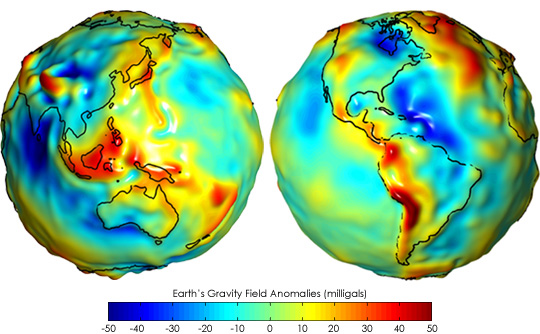
Understanding the Core Question: Yerçekimi – One Word or Two?
The Turkish language, rich in its history and structure, often presents intriguing challenges, especially when it comes to compound words. Among the most frequently queried terms is "yerçekimi," the Turkish equivalent of "gravity." This fundamental concept, encountered from physics classrooms to daily conversations, often sparks a common question: is "yerçekimi" written as one word or two? The debate around "yerçekimi" vs. "yer çekimi" is more than just a stylistic preference; it delves into the very rules that govern Turkish orthography and the nuanced meanings conveyed by compound structures.
For anyone striving for linguistic precision, whether a student, a professional, or simply a language enthusiast, knowing the correct form is crucial. Incorrect usage can lead to a lack of clarity, reduce the perceived professionalism of a text, and, perhaps most importantly, deviate from the established norms set by the Turkish Language Association (Türk Dil Kurumu, TDK). This article aims to settle the dispute definitively, offering a comprehensive guide rooted in TDK's official rules, and providing valuable insights into why this particular compound word is structured the way it is. We will not only answer the popular query "Yer Çekimi Nasıl Yazılır" but also explore the underlying principles that make "yerçekimi" a single, unified term.
The Definitive Answer from TDK: "Yerçekimi" is Bitişik (One Word)
Let's cut straight to the chase: according to the Turkish Language Association (TDK), the authoritative body for the Turkish language, the correct spelling for "gravity" is yerçekimi, written as a single, combined word. The form "yer çekimi," written as two separate words, is considered incorrect and should be avoided in all formal, academic, and journalistic contexts.
The TDK's guidelines are meticulously developed to ensure consistency, clarity, and grammatical correctness across the Turkish language. For compound words that form a new, singular concept—especially those where the meaning of the individual words combines to create a distinct, new meaning—the TDK often prescribes a unified, single-word spelling. "Yerçekimi" perfectly fits this criterion. It doesn't merely mean "earth's pulling" or "place's pull" as two distinct entities; it refers to the singular, universal force that attracts objects towards the center of the Earth (or any celestial body).
Consider these examples showcasing the correct usage:
- Dünya'nın yerçekimi sayesinde cisimler yere düşer. (Objects fall to the ground thanks to Earth's gravity.)
- Astronotlar düşük yerçekimi ortamında çalışır. (Astronauts work in a low-gravity environment.)
- Yerçekimi kuvveti gezegenlerin hareketini de etkiler. (The force of gravity also affects the movement of planets.)
- Ay'da Dünya'ya göre daha düşük bir yerçekimi vardır. (There is lower gravity on the Moon compared to Earth.)
Each example clearly demonstrates "yerçekimi" as a cohesive unit, representing the scientific phenomenon of gravity. Using "yer çekimi" would not only be grammatically incorrect but could also subtly disrupt the semantic flow of the sentence, even if the general meaning is still understood by a native speaker. Precision in language, particularly in scientific and formal discourse, leaves no room for such ambiguities.
Why "Yerçekimi" is a Single Concept: Semantic Unity in Turkish
The TDK's decision to classify "yerçekimi" as a single word is rooted in the principle of semantic unity. In Turkish, when two or more words combine to create a new concept whose meaning is distinct from the sum of its individual parts, they often merge into a single word. This is particularly true for established scientific, technical, or idiomatic terms. "Yer" means 'place' or 'earth', and "çekim" means 'pull' or 'attraction'. When combined to form "yerçekimi," the term signifies the specific scientific force of gravity, not just any 'earth-pull' or 'place-pull'.
This linguistic phenomenon is common across many languages, including English. For instance, "greenhouse" is one word because it describes a specific structure for growing plants, not just any house that happens to be green. Similarly, "breakdown" refers to a failure or analysis, not just an act of breaking something down. The Turkish language employs this same logic, emphasizing that certain combined terms embody a new, singular identity.
The consistent use of "yerçekimi" as one word ensures that this fundamental scientific concept is represented uniformly across all written materials in Turkish. It avoids potential misinterpretations and reinforces the term's status as a recognized, indivisible entity within the lexicon. For students learning about physics, for scientists publishing research, or for journalists reporting on space exploration, adhering to this rule is paramount for accuracy and credibility. The question "Yer Çekimi Nasıl Yazılır" is a testament to the fact that even seemingly simple terms can hide deeper grammatical considerations.
Practical Tips for Mastering Turkish Compound Words
Understanding the rule for "yerçekimi" can also serve as a gateway to mastering other complex aspects of Turkish orthography, especially concerning compound words. Here are some practical tips to help you navigate these linguistic nuances:
- Consult the TDK Dictionary Regularly: When in doubt, the TDK's official online dictionary (Güncel Türkçe Sözlük) is your most reliable resource. It provides the definitive spelling for thousands of words and is updated periodically. Making it a habit to check will significantly improve your accuracy.
- Look for Semantic Shift: Ask yourself if the combined words create a new meaning that isn't immediately obvious from the individual words. If the new meaning is a specific, established concept (like "yerçekimi" for gravity), it's often written as one word. Other examples include "göktaşı" (meteor - literally 'sky stone') or "bilgisayar" (computer - literally 'knowledge counter').
- Pay Attention to Sound Changes: While not directly applicable to "yerçekimi," some compound words are written together if one of the constituent words undergoes a sound change (e.g., vowel drop or consonant change) when combined.
- Practice with Examples: The more you read and write in Turkish, the more familiar you will become with common compound words. Pay attention to how they are used in reputable sources like newspapers, academic texts, and literary works.
- Mnemonic Devices: For "yerçekimi," you can remember that just as gravity is a single, unified force, its Turkish name should also be a single, unified word.
By applying these strategies, you can confidently address similar spelling dilemmas and enhance your overall proficiency in Turkish. The journey to mastering Turkish, especially the correct spelling of "yerçekimi", involves a commitment to precision and a willingness to leverage authoritative resources.
Conclusion: Embracing Correctness for Clarity
The question of whether "yerçekimi" is one word or two is a common yet fundamental query in Turkish orthography. The definitive answer from the Turkish Language Association (TDK) is clear: yerçekimi is written as a single word. This ruling is not arbitrary but is based on the principle of semantic unity, where "yer" and "çekim" combine to form a new, singular concept representing the force of gravity.
Adhering to this correct spelling is vital for maintaining clarity, professionalism, and grammatical accuracy in all forms of written Turkish, from school assignments to scientific publications. By understanding the reasoning behind the TDK's guidelines and actively applying practical tips for navigating compound words, speakers and learners of Turkish can significantly enhance their linguistic precision. So, the next time you write about gravity in Turkish, remember that "yerçekimi" stands as a powerful, unified concept, appropriately represented by a single, unified word.